Tel:
+86 19732304298

What are you looking for?
A quality coolant reservoir tank plays a critical role in preventing engine overheating, reducing coolant loss, and maintaining stable operating temperatures. Depending on the vehicle, it functions either as a non-pressurized recovery bottle or as a pressurized expansion tank—two designs that are not interchangeable. For pickup truck owners, repair shops, parts distributors, and aftermarket buyers, understanding this difference is essential for accurate diagnosis and reliable replacement.
In this guide, we’ll explain what a coolant reservoir is, how it works, the signs that indicate it needs replacement, and why choosing the right tank matters for long-term engine protection.
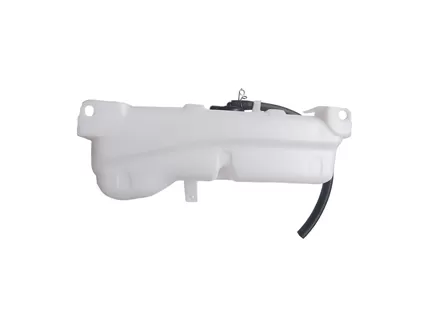
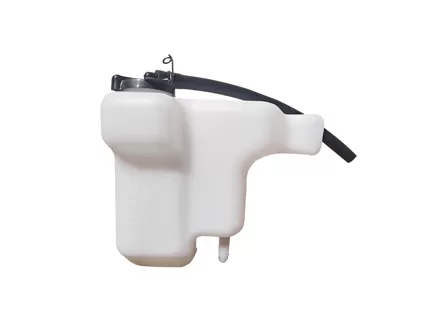
A coolant reservoir is a container connected to the engine cooling system that provides additional space for coolant as its volume changes during heating and cooling. Most are made from translucent plastic and feature MIN and MAX markings, allowing the coolant level to be checked without opening the system.
Not every coolant reservoir works the same way. Depending on the vehicle design, it may function as a non-pressurized overflow bottle or as a pressurized expansion tank integrated into the cooling circuit. Replacement tanks should therefore be selected based on the vehicle’s make, model, year, OE reference, mounting points, hose connections, cap configuration, and overall cooling-system design—not by appearance alone.
A coolant reservoir plays several important roles in the cooling system:
Storing excess coolant when the engine becomes hot
Maintaining additional coolant available to the system
Allowing coolant to return as the engine cools
Making coolant-level inspection easier
Supporting pressure management in systems that use a pressurized expansion tank
Without sufficient expansion space, rising coolant volume can place unnecessary pressure on cooling-system components. A properly functioning reservoir helps maintain a stable coolant level and supports normal engine temperature control.
This is especially important for pickup trucks that operate in hot climates, carry heavy loads, tow trailers, or spend long periods in stop-and-go traffic. In these demanding conditions, a reliable coolant reservoir contributes directly to consistent cooling performance and long-term engine protection.
| Feature | Coolant Overflow Tank (Recovery Tank) | Coolant Expansion Tank |
| Pressure System | Non-pressurized (atmospheric) | Fully pressurized, part of the cooling circuit |
| Main Function | Collects excess coolant discharged from the radiator | Provides expansion space and maintains system pressure |
| Connection | Connected to radiator via a single overflow hose | Integrated into the main cooling circuit with multiple hoses |
| Pressure Cap Location | Standard pressure cap on the radiator | High-pressure cap usually located on the tank itself |
| Typical Application | Traditional recovery systems | Modern pressurized cooling systems |
| Material & Sealing | Less critical (not under constant pressure) | Critical – requires high material quality and precise seals |
Coolant Overflow Tank: Connected to the radiator by an overflow hose. Expanding coolant flows into the tank; when the engine cools, coolant returns to the radiator. The bottle itself is typically not pressurized.
Coolant Expansion Tank: Integrated into the pressurized cooling circuit. It often holds the system pressure cap and connects directly to multiple hoses. Material quality, sealing surfaces, filler-neck dimensions, and cap compatibility are critical.
The coolant reservoir tank operates on the principle of thermal expansion. When the engine starts and reaches operating temperature, the coolant absorbs heat and expands. As the temperature rises, pressure inside the cooling system increases, pushing the excess coolant volume into the reservoir or expansion tank.
After the engine is switched off, the coolant gradually cools and contracts. System pressure drops, allowing the coolant to be drawn back into the cooling circuit. This continuous cycle of expansion and contraction keeps the coolant level stable and helps maintain proper system pressure throughout normal operation.
Coolant reservoirs are exposed to repeated heating and cooling cycles throughout the life of the vehicle. Over time, plastic can become brittle, seals can deteriorate, and mounting points may become damaged.
Common signs that a coolant reservoir may require replacement include:
visible cracks in the tank;
coolant stains around seams or hose connections;
coolant leaking beneath the reservoir;
brittle or severely discolored plastic;
damaged mounting tabs;
cracked hose fittings;
damaged filler necks;
poor cap sealing;
repeated coolant loss.
A dropping coolant level always requires investigation. Coolant loss may also come from hoses, clamps, the radiator, water pump, thermostat housing, or other components. Identify the source before replacing the tank.
On pressurized reservoirs, pay close attention to the filler neck and pressure cap—a poor seal prevents the system from holding designed pressure.
Never remove a pressurized coolant reservoir cap while the engine is hot. Hot coolant and steam can cause serious burns. Always allow the system to cool completely before inspection or service.
A typical coolant reservoir replacement process includes the following steps:
Allow the engine to cool completely before opening any coolant component.
Confirm the replacement tank matches overall shape, mounting points, hose locations, filler neck, cap type, and sensor connections.
Drain coolant if necessary to limit spillage.
Disconnect the existing reservoir—hoses, electrical connectors, sensors, bolts, clips, or brackets.
Inspect surrounding components—hoses, clamps, connectors, and brackets. Replace any damaged parts at the same time.
Install the new reservoir in the original mounting locations. Do not force plastic tabs or hose necks.
Reconnect all hoses, sensors, fasteners, and the correct reservoir cap.
Refill with coolant that meets the vehicle manufacturer’s specification (do not select by color alone).
Bleed the system if required, run the engine per service procedure, check for leaks, and recheck the level after full cool-down.
A properly functioning coolant reservoir tank is far more than a simple plastic container—it is a critical safeguard that helps maintain stable coolant levels, manage system pressure, and prevent overheating. Whether your pickup operates in extreme heat, under heavy loads, or in daily stop-and-go traffic, choosing the correct reservoir (overflow or expansion type) and ensuring precise fitment directly protects engine longevity and reliability.
For vehicle owners, timely replacement of a cracked or leaking tank prevents costly cooling-system failures. For importers, distributors, and aftermarket brands, partnering with a manufacturer that prioritizes accurate vehicle fitment, material durability, and consistent quality control reduces returns and builds long-term trust with customers.
Looking for reliable OEM coolant reservoir tanks for pickups?
HUAERFEI offers vehicle-specific solutions for Toyota Hilux, Camry, Land Cruiser, Nissan, and more—backed by durable construction, precise fitment, and full B2B support including private labeling and customized packaging.
Contact us today with your vehicle applications, OE numbers, and quantity requirements to discuss OEM supply options.
Not necessarily. A coolant reservoir is a general term. An overflow or recovery tank normally stores coolant displaced from the radiator, while an expansion tank may form part of the pressurized cooling circuit.
The correct replacement should always be identified according to the vehicle's cooling-system design.
Many expansion tanks are pressurized and use a pressure cap, although cooling-system configurations vary between vehicles.
Always verify the original vehicle design before selecting a replacement.
Driving with a cracked coolant reservoir is not recommended.
A crack may allow coolant to escape, which can eventually reduce the coolant level and increase the risk of overheating. The cooling system should be inspected and the damaged component replaced as soon as practical.
Possible causes include a cracked reservoir, damaged hoses, loose clamps, a leaking radiator, pressure-cap problems, water-pump leakage, or other cooling-system faults.
The leak source should be diagnosed rather than assuming the reservoir is always responsible.
Only if the existing cap is compatible with the replacement tank and remains in good condition.
For pressurized cooling systems, the cap is an important pressure-control component, so damaged or incorrect caps should be replaced.
Check the vehicle make, model, production year, engine configuration if applicable, and OE reference.
You should also compare mounting points, hose ports, filler-neck design, sensor connections, and tank dimensions.
Provide vehicle brand, model, year, OE number (if available), photos or drawings, estimated quantity, destination market, packaging needs, and any private-label requirements. Complete data allows accurate fitment verification before sampling or production.
For importers, wholesalers, distributors, and aftermarket brands sourcing pickup coolant reservoirs, HUAERFEI can review your vehicle applications, OE references, quantities, and packaging requirements to identify suitable replacement products and discuss OEM supply options.